







Jaundice






Sponsored
Jaundice is a term used
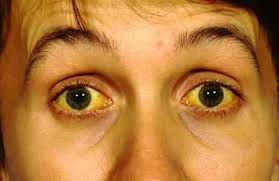
to describe the yellowing of the skin and the whites of the eyes. It's caused
by a build-up of a substance called bilirubin in the blood and body's tissues.
Any condition that disrupts the movement of bilirubin from the blood to the
liver and out of the body can cause jaundice. Bilirubin is a yellow pigment
that is formed by the breakdown of dead red blood cells (RBC) in the liver.
There are several ways that a build- up of bilirubin can occur:
If red blood cells broke down too early, the spleen gets overloaded and hence
too much bilirubin is produced to be handled by the liver. Unprocessed
bilirubin accumulates in the bloodstream and eventually the skin and eyes looks
yellow. This condition is called hemolytic anemia. At times this condition is
inherited. Hemolytic anemia may also occur as a side-effect of certain drugs.
Sometimes the trouble is in the liver cells. If there is a faulty uptake,
processing or excretion of bilirubin it will result in an accumulation of
bilirubin in the bloodstream. Newborn babies can be temporarily jaundiced
because of lack of mature enzymes needed to process bilirubin. In adults,
alcoholism is a common cause of damage to liver cells. Other toxins and certain
drugs can also cause acute damage to the liver.
A blockage in the bile duct can also result in a build-up of fully processed
bilirubin. This can spill over into the urine and cause it to become very dark.
The blockage is most commonly caused by a gallstone.
Jaundice is classified
into three categories, depending on which part of the physiological mechanism
the pathology affects. The three categories are:
Pre-hepatic jaundice: Pre hepatic jaundice is due to increased rate of
haemolysis (breakdown of RBCs). Causes of haemolysis include:
Malaria
Sickle cell anemia
Thalassaemia
Gilbert syndrome
Hepatocellular jaundice: Hepato cellular
jaundice can be due to any infection in the liver. It can be due to infection
or exposure to a harmful substance, such as alcohol, disrupts the liver’s
ability to process bilirubin.
Post hepatic jaundice: Post-hepatic jaundice, is also called as obstructive
jaundice, is caused by an interruption to the drainage of bile in the biliary
system. The most common cause is due to gallstone in the common bile duct or
due to pancreatic cancer. Some underlying conditions that may cause jaundice
are:
Acute inflammation of the liver - May impair the ability of the liver to
conjugate and secrete bilirubin, resulting in a buildup of bilirubin.
Inflammation of the bile duct - May prevent the secretion of bile and removal
of bilirubin, causing jaundice.
Obstruction of the bile duct - Prevents the liver from disposing of bilirubin,
which results in hyperbilirubinemia.
Hemolytic anemia - Production of bilirubin increases when large quantities of
erythrocytes are broken down.
Gilbert's syndrome - An inherited condition that impairs the ability of enzymes
(biomolecules that provoke chemical reactions between substances) to process
the excretion of bile.
Cholestasis- A condition in which the flow of bile from the liver is interrupted.
The bile containing conjugated bilirubin remains in the liver instead of being
excreted.
The main symptoms of
jaundice are:
Yellow discoloration of the eyes and of the skin
Pale coloured stools (faeces)
Dark coloured urine
There's no treatment for
jaundice as such, but disease can be managed by managing symptoms and causes of
jaundice.
Pre-hepatic jaundice
In treating pre-hepatic jaundice, the objective is to prevent the rapid
breakdown of red blood cells that's causing the level of bilirubin to build up
in the blood.
In cases of infections, such as malaria, the use of medication to treat the
underlying infection is usually recommended. For genetic blood disorders, such
as sickle cell anemia or thalassemia, blood transfusions may be required to
replace the red blood cells.
Gilbert's syndrome doesn't usually require treatment because the jaundice
associated with the condition isn't particularly serious and doesn't pose a
serious threat to health.
Intra-hepatic jaundice
In cases of intra-hepatic jaundice, there's little that can be done to repair
any liver damage, although the liver can often repair itself over time.
Therefore, the aim of treatment is to prevent any further liver damage
occurring.
For liver damage that's caused by infection, such as viral hepatitis or
glandular fever, anti-viral medications may be used to help prevent further
damage.
If the damage is due to exposure to harmful substances, such as alcohol or
chemicals, avoiding any further exposure to the substance is recommended.
In severe cases of liver disease, a liver transplant is another possible
option.
Post-Hepatic Jaundice
In most cases of post-hepatic jaundice, surgery is recommended to unblock the
bile duct system.
During surgery, it might be required to remove:
The gallbladder
A section of the bile duct system
A section of the pancreas to prevent further blockages occurring
NHP provides indicative information for better understanding of health. For any
diagnosis and treatment purpose consult physician.
It's not possible to
prevent all cases of jaundice because it can be caused by a wide range of
conditions or circumstances.
However, by taking certain precautions risk of developing jaundice can be
minimised. These include:
Ensuring not to exceed the recommended daily amount (RDA) for alcohol
consumption.
Maintaining a healthy weight for height and build.
Vaccination against hepatitis A and
hepatitis B.
Avoid high-risk behaviours such as intravenous drug use or unprotected
intercourse.
Avoid potentially contaminated food/water and maintain good hygiene
Avoid medications and toxins which can cause hemolysis or directly damage the
liver.
Urine test: It is used
to measure levels of a substance called urobilinogen. Urobilinogen is produced
when bacteria break down bilirubin inside the digestive system.
Blood tests: Blood tests include blood levels of enzymes found primarily from
the liver, such as the aminotransferases (ALT, AST), and alkaline phosphatase
(ALP), bilirubin (which causes the jaundice), and protein levels, specifically,
total protein and albumin.
Other primary lab tests for liver function include gamma glutamyl
transpeptidase (GGT) and prothrombin time (PT).
NHP provides indicative information for better understanding of health. For any
diagnosis and treatment purpose consult physician.
www.nhs.uk
www.cdc.gov
www.nlm.nih.gov
www.nevdgp.org
Comments