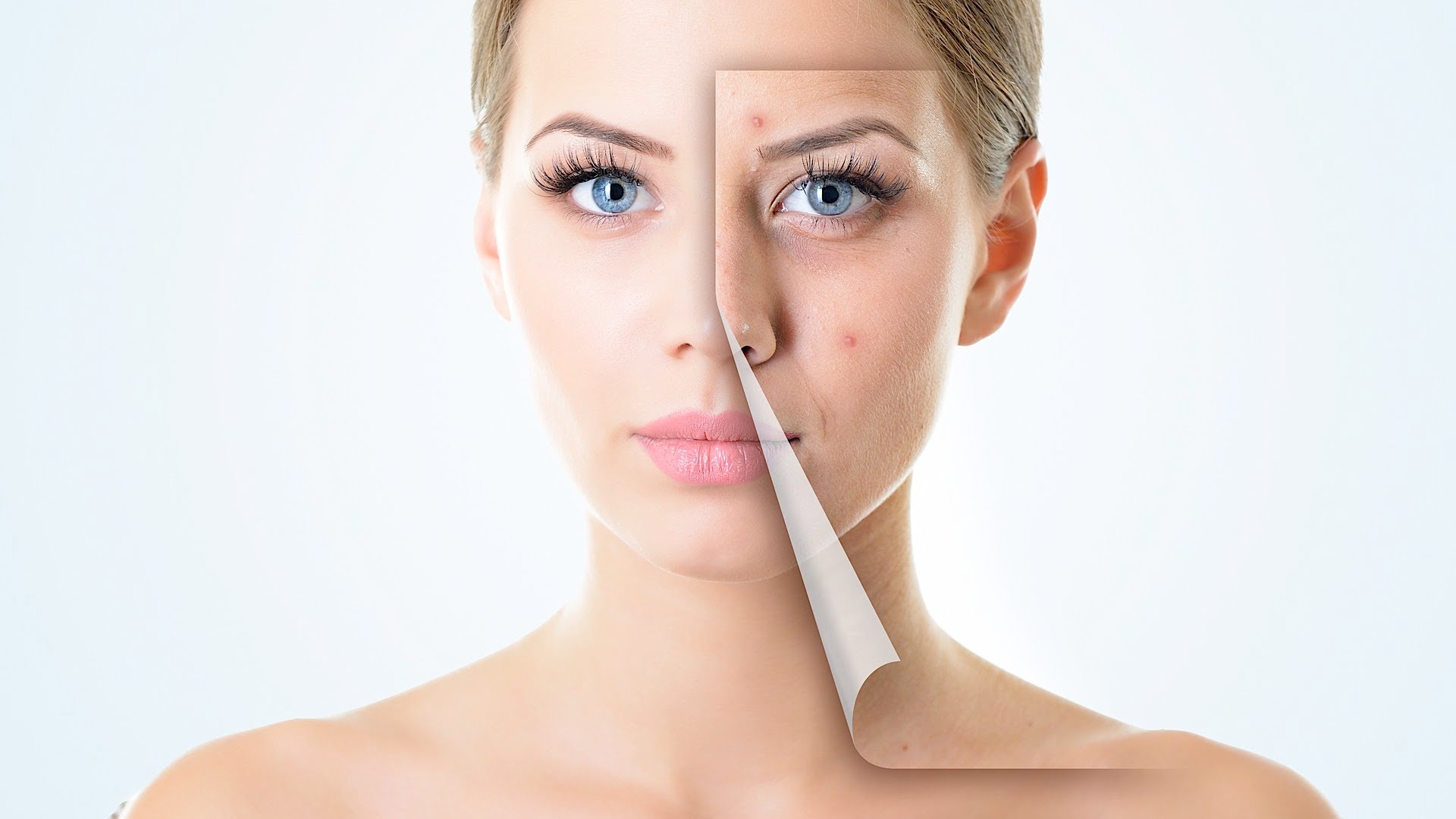
ACNE(pimples) is a disease of the hair follicles of the face, chest, and back that affects almost all teenagers during puberty the only exception being members of a few primitive Neolithic tribes living in isolation. It is not caused by bacteria, although bacteria play a role in its development. It is not unusual for some women to develop acne in their mid- to late-20s.
What causes acne?
No one factor causes acne. Acne occurs when sebaceous (oil) glands attached to the hair follicles are stimulated at the time of puberty or due to other hormonal changes. Sebum (oil) is a natural substance that lubricates and protects the skin. Associated with increased oil production is a change in the manner in which the skin cells mature, predisposing them to plug the follicular pore. The plug can appear as a whitehead if it is covered by a thin layer of skin, or if exposed to the air, the darker exposed portion of the plug is called a "blackhead." The plugged hair follicle gradually enlarges, producing a bump.
Here are some factors that don't usually play a role in acne:
Food: Parents often tell teens to avoid pizza, greasy and fried foods, and junk food. While these foods may not be good for overall health, they don't play an important causal role in acne. Although some recent studies have implicated a high-carbohydrate diet, milk, and pure chocolate in aggravating acne, these findings are far from established.
Dirt: Blackheads are oxidized oil, not dirt. Sweat does not cause acne and is produced by entirely separate glands in the skin. On the other hand, excessive washing can dry and irritate the skin.
Stress: Some people get so upset by their pimples that they pick at them and make them last longer. Stress, however, does not play much of a direct role in causing acne.
When should someone start acne treatment?
Since everyone gets acne at some time, the right time to treat it is when it becomes bothersome or when the potential for scarring develops. This can be when severe acne flares suddenly, for mild acne that just won't go away, or even when a single pimple decides to show up the week before one's prom or wedding.
What can people do to get rid of their acne?
Cleansing and skin care
Despite what one might read in popular style and fashion magazines, there is no magic product or regimen that is right for every person and situation.
Mild cleansers: Washing once or twice a day with a mild cleansing bar or liquid (for example, Dove, Neutrogena, Basis, Purpose, and Cetaphil are all inexpensive and popular) will keep the skin clean and minimize sensitivity and irritation.
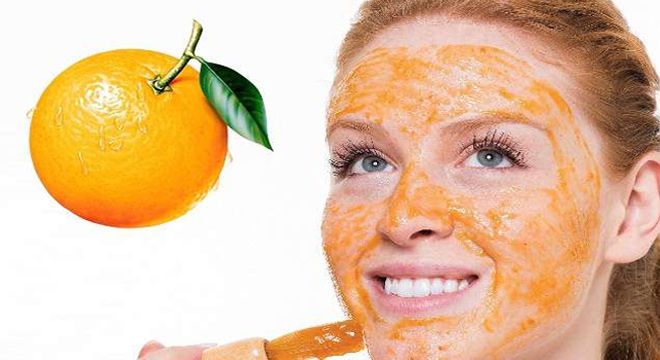
Exfoliating cleansers and masks: A variety of mild scrubs, exfoliants, and masks can be used. These products may contain salicylic acid in a concentration that makes it a very mild peeling agent. These products remove the outer layer of the skin and thus open pores. Products containing glycolic or alpha hydroxy acids are also gentle skin exfoliants.
Topical (external) applications: Antibacterial cleansers come in the form of gels, creams, and lotions that are applied to the affected area. The active ingredients that kill surface bacteria include benzoyl peroxide, sulfur, and resorcinol. Some brands promoted on the Internet and cable TV (such as ProActiv) are much more costly than identical and sometimes more potent products one can buy in the drugstore.
Reduce the oil : One cannot stop oil glands from producing oil. Even isotretinoin (Accutane, see below) only slows down oil glands for a while; they resume normal activity later. It is possible to get rid of oil on the surface of the skin and reduce the appearance of shine.Use a gentle astringent/toner to wipe away oil. (There are many brands available in pharmacies, as well as from manufacturers of cosmetic lines.)
Cosmetics: Don't be afraid to hide blemishes with flesh-tinted cover-ups or even foundation, as long as it is water-based (which makes it noncomedogenic). There are many quality products available.
Facials: While not absolutely essential, steaming and "deep-cleaning" pores is useful, both alone and in addition to medical treatment, especially for people with "whiteheads" or "blackheads." Having these pores unclogged by a professional also reduces the temptation to do it oneself.
Toothpaste: One popular home remedy is to put toothpaste on zits. There is no medical basis for this. The same applies to vinegar.


 Contact Us









 Hospitals
 Doctors
 Diagnostic
 Pharmacy
 Health Tips
 Blog
Blog







 KayaWell Expert





Comments